
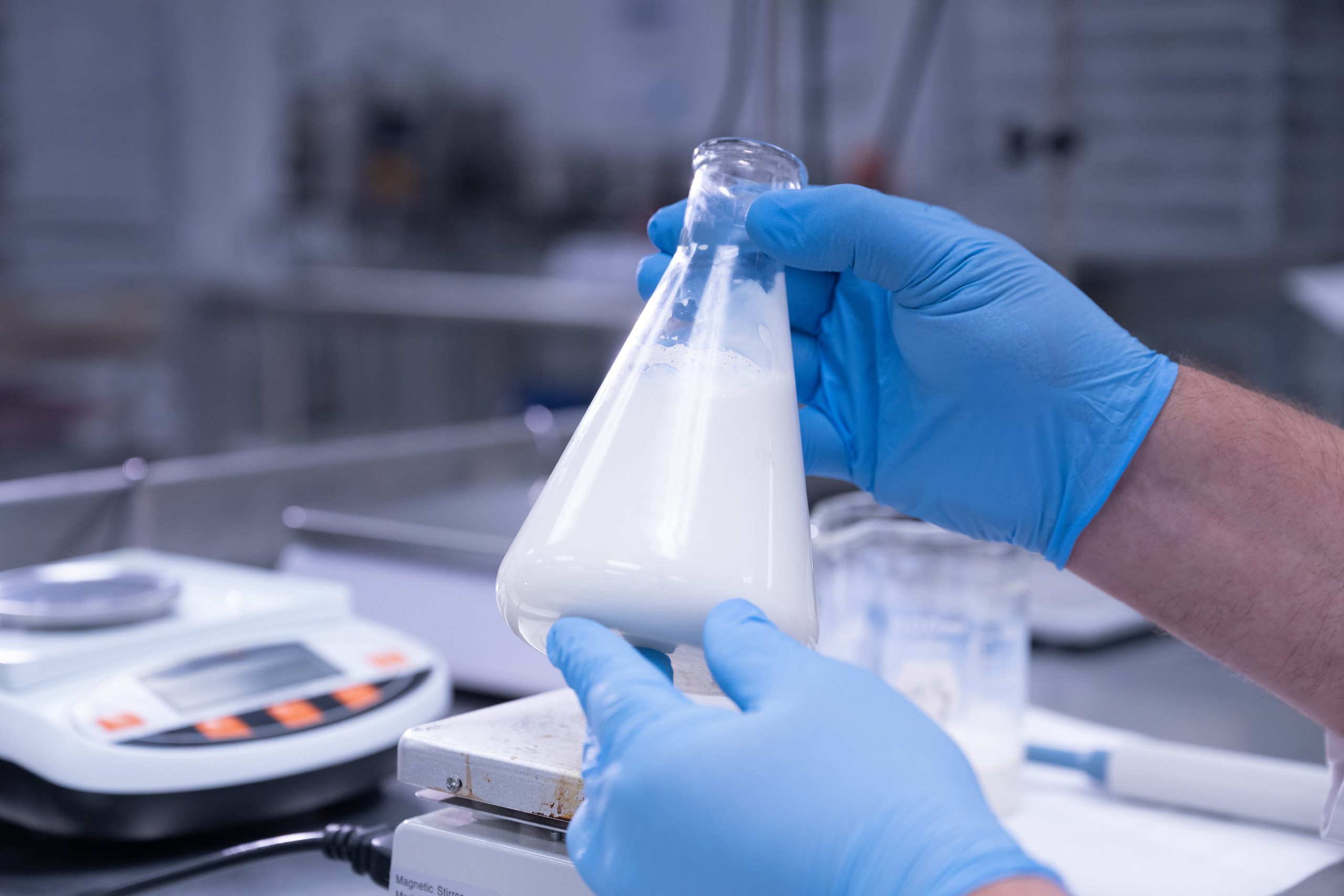
Evaluating THC emulsion samples is one of the most important steps in selecting a supplier. It’s also one of the most misunderstood. Many brands focus on initial appearance or taste, but those are only surface-level indicators. What matters is how the emulsion performs over time, under real production conditions, and across batches.
What Most People Get Wrong
Common mistakes include:
- Judging based on a single sample
- Prioritizing taste over performance
- Not testing in a real beverage system
- Ignoring how the sample behaves over time
A sample that looks good on day one can fail quickly in production or distribution.
What Actually Matters
Stability Over Time
This is the first real test.
Evaluate:
- Does the sample remain uniform over days and weeks?
- Is there any separation or settling?
- Does turbidity or appearance change?
If stability breaks down, nothing else matters.
Performance in Your Beverage
Testing in water is not enough.
Evaluate:
- How does it perform in your actual formulation?
- Does it hold up with flavor systems and packaging?
- Does it impact flavor or consumer experience?
What works in a lab may not work in your product.
Batching, Order of Addition, and Integration
This is where many issues start.
Evaluate:
- How easily does it fit in your process?
- Does it require premixing or inefficient handling?
- When should it be added during production?
If inclusion is complicated, it will create problems at scale.
Processing Tolerance
Your sample needs to survive production conditions.
Evaluate:
- How does it handle heat (pasteurization, retort, or hot fill)?
- What happens under agitation or pressure?
Some emulsions break under real-world conditions.
Consistency Across Samples
One good sample means very little.
Evaluate:
- Are multiple batch samples consistent?
- Do they perform the same way across tests?
Consistency is what you are actually buying.
Dosing Reliability
This is where consumer trust is built or lost.
Evaluate:
- Is cannabinoid distribution even throughout the product?
- Are test results consistent across batches?
Inconsistent potency leads to inconsistent consumer experiences.
Documentation and Data
A strong sample should come with strong support.
Evaluate:
- Is there stability data?
- Are there clear handling and storage guidelines?
- Are COAs provided and consistent?
If the data isn’t there, you’re guessing.
A Simple Way to Think About It
Most teams ask: “Does this sample look good?”
The better question is: “Will this still perform the same way after production, distribution, and time?”
Because that’s where real problems show up.
Red Flags to Watch For
- Looks great initially, but no long-term data
- Requires overly specific or complex mixing
- Inconsistent results across batches
- Limited documentation or opaque chain of custody
- A broker or middleman rather than the manufacturer
The Bottom Line
A THC emulsion sample is not the product. It’s an indicator of how the system behind it performs.
The right evaluation focuses on:
- Stability
- Batching
- Consistency
- Real-world performance
Not just first impressions.